A Legitimate Voice
for Borderland Peace.
RIAMRIAM Peace and Development Network (RPDN) is a community-driven Civil Society Organization operating across Kenya and the wider East African Ateker corridor. We bridge the gap between traditional conflict resolution systems and modern developmental governance to foster long-term stability and resilience among pastoralist communities.
Grassroots Legitimacy
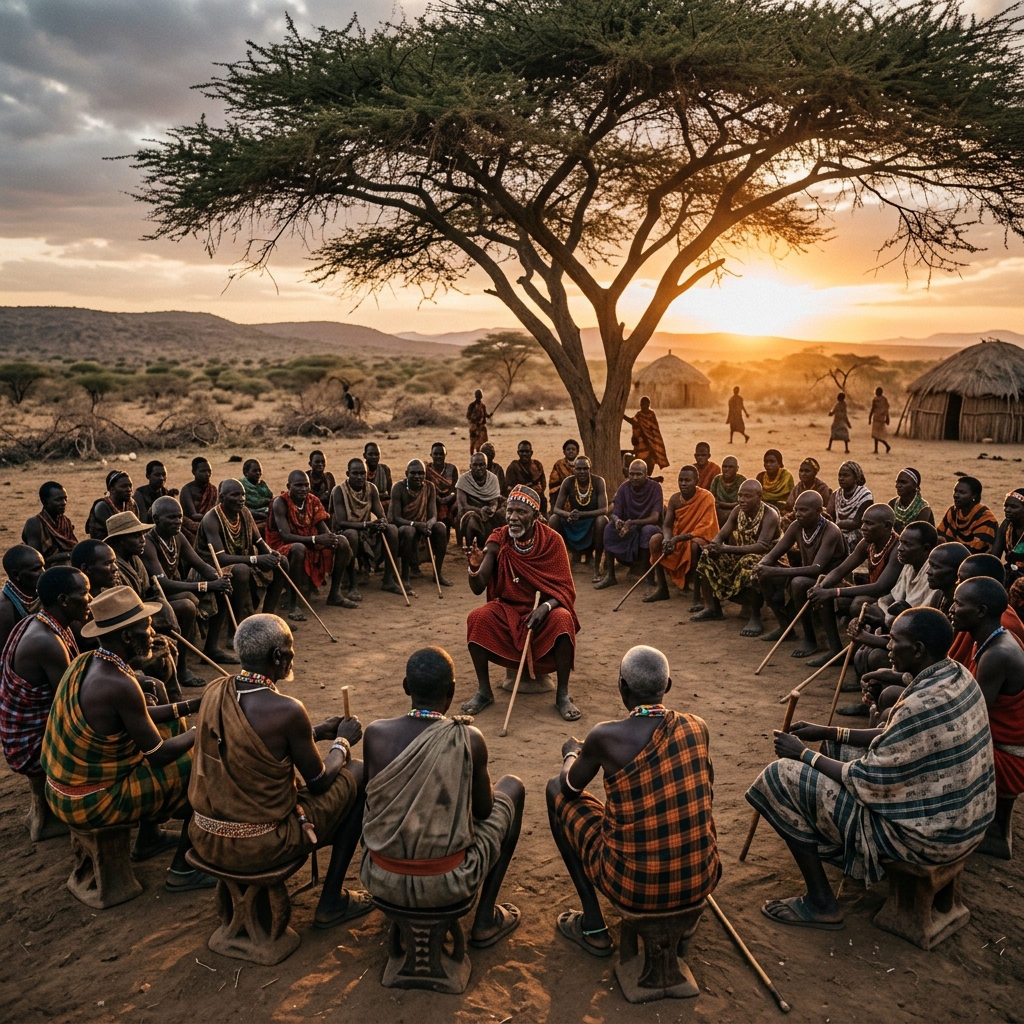
Community members and traditional elders gathering under an acacia tree to establish mutual resource-sharing treaties along border corridors.
Background & Origin
Meeting and meeting again for peace.
The name “RiamRiam” is drawn directly from Ateker cultural traditions. It translates to “meeting and meeting again”, symbolizing continuous dialogue, negotiation, and peaceful dispute resolution. Our motto, “Building Peace. Empowering Communities. Transforming Lives,” guides every intervention.
A Prosperous East Africa
We envision a peaceful, resilient, inclusive, and prosperous East Africa where borderland communities live in dignity, coexist harmoniously, and enjoy equitable opportunities for sustainable and conflict-free development.
Development Context
Key Structural Challenges
Communities within RPDN’s operational areas face interconnected social, environmental, and institutional drivers of vulnerability. We target five core structural drivers:
Conflict and Insecurity
Cross-border raids involving Toposa, Nyangatom, Dassanach, and Karimojong communities; inter-county resource clashes; clan-based exclusion; and the emergence of armed youth gangs.
Weak Peace Infrastructure
The erosion of traditional elders' authority, fragile or unmonitored cross-border grazing agreements, and inadequate institutional coordination mechanisms.
Climate Vulnerability
Recurrent droughts, severely degraded rangelands, severe water scarcity, and fisheries insecurity along the Lake Turkana basin driving pastoralist migrations.
Youth Crisis
High youth unemployment rates, rising substance abuse, and criminal exploitation by political or commercial business interests seeking to incite violence.
Institutional Weakness
Fragmented local stakeholder coordination, weak decentralized governance systems, and limited direct donor access for grassroots, community-led institutions.
Our Journey
A History of Regional Commitment
Over more than two decades, RPDN has transitioned from a local peace initiative to a prominent regional network.
Grassroots Foundation
RIAMRIAM was established as a localized grassroots peace coalition to address escalating cross-border conflicts and cattle rustling within the Karamoja cluster of the Ateker corridor.
Landmark Accords
Facilitated historic traditional resource-sharing treaties and inter-communal dialogue forums along the Kenya-Uganda border, establishing cultural conflict resolution protocols.
Integrated Resilience Framework
Expanded institutional programming to address environmental conflict drivers, launching joint climate adaptation and sustainable pastoralist livelihoods initiatives.
Strategic Revitalization
Re-engineered as the RIAMRIAM Peace and Development Network (RPDN), introducing a robust 3-tiered governance model to manage international partnerships and regional stability.
Our Foundation
Core Institutional Values
These principles guide our programmatic actions, coordinate our governance, and preserve trust among the pastoralist communities we represent.
Peace and Non-Violence
We promote peaceful coexistence, dialogue, and non-violent approaches to conflict prevention, management, and resolution.
Integrity and Accountability
We uphold the highest standards of professionalism, ethical conduct, transparency, and responsible stewardship of resources entrusted to us.
Human Dignity and Respect
We believe that every individual deserves respect, protection, and equal opportunities regardless of gender, age, ethnicity, religion, or social status.
Inclusivity and Equity
We are committed to ensuring that marginalized and vulnerable groups—including women, youth, persons with disabilities, and indigenous communities—actively participate in decision-making and development processes.
Community Ownership and Participation
We recognize communities as drivers of their own development and prioritize locally led solutions that foster ownership, sustainability, and resilience.
Good Governance and Transparency
We promote accountable leadership, citizen participation, institutional effectiveness, and transparent governance systems at all levels.
Innovation and Continuous Learning
We embrace innovation, evidence-based programming, knowledge sharing, and adaptive learning to maximize impact and respond effectively to emerging challenges.
Gender Equality and Social Justice
We champion equal rights, opportunities, and meaningful participation for women and girls while addressing systemic barriers to inclusion and empowerment.
Partnership and Collaboration
We believe sustainable change is achieved through strategic partnerships and collective action involving communities, governments, civil society, development partners, and the private sector.
Strategic Alignment with UN SDGs
RPDN aligns its field operations, research projects, and peace-building models with the United Nations Sustainable Development Goals. By integrating local custom with global targets, we secure international credibility.
SDG 16: Peace & Justice
Establishing early warning systems, local peace committees, and inter-community border grazing councils.
SDG 13: Climate Action
Developing dryland water systems, climate resilience frameworks, and resource-sharing structures.
SDG 5: Gender Equality
Ensuring women peace champions are central to mediation networks and political oversight.
SDG 17: Partnerships
Coordinating joint cross-border interventions with IGAD, UNDP, USAID, and regional governments.